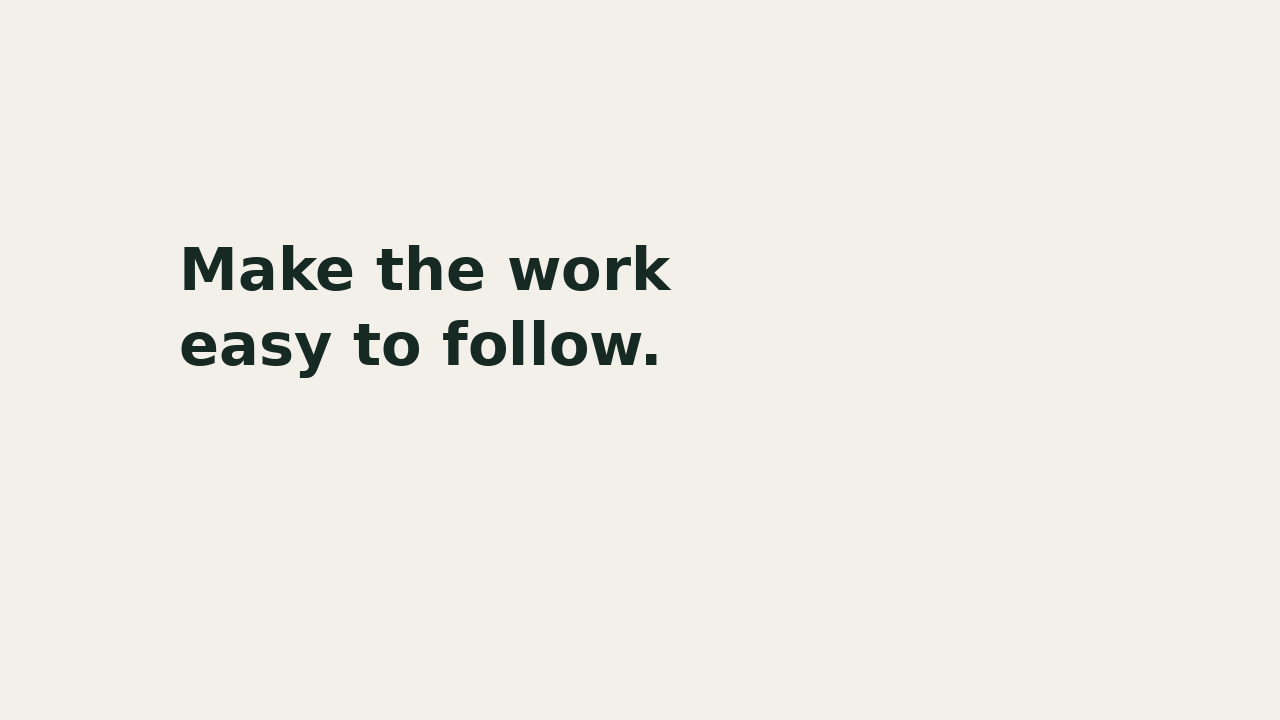
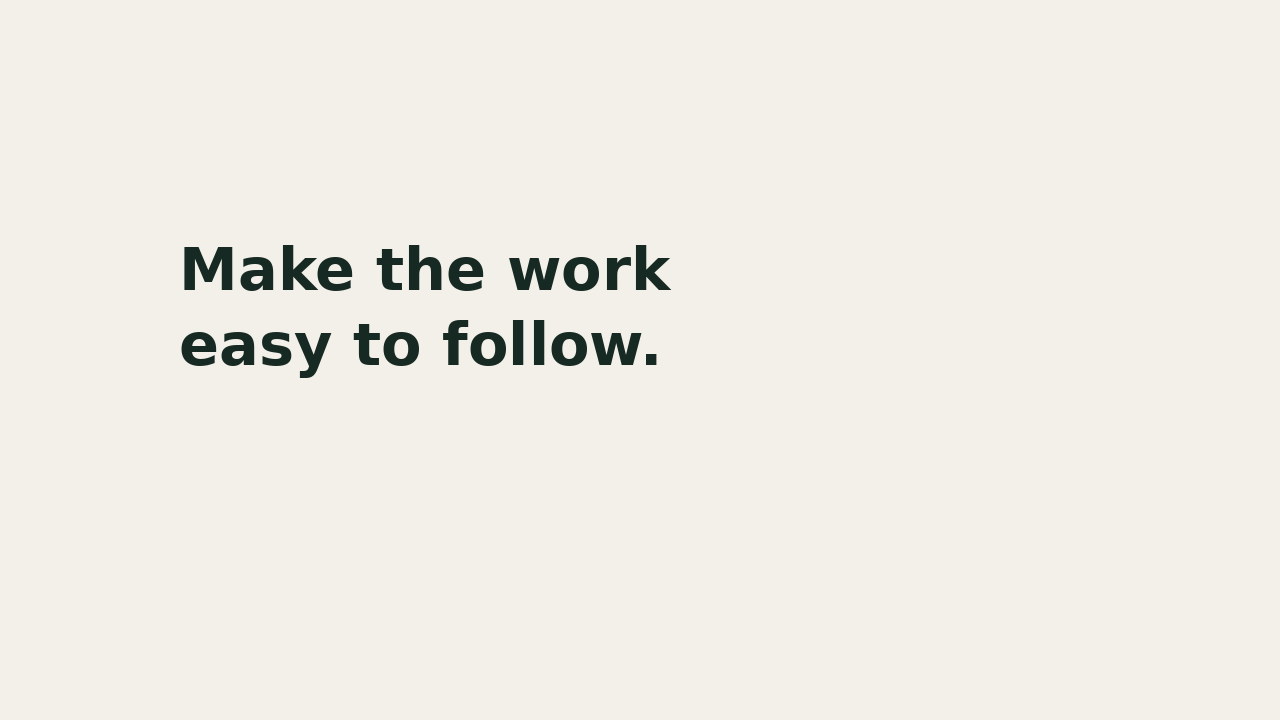
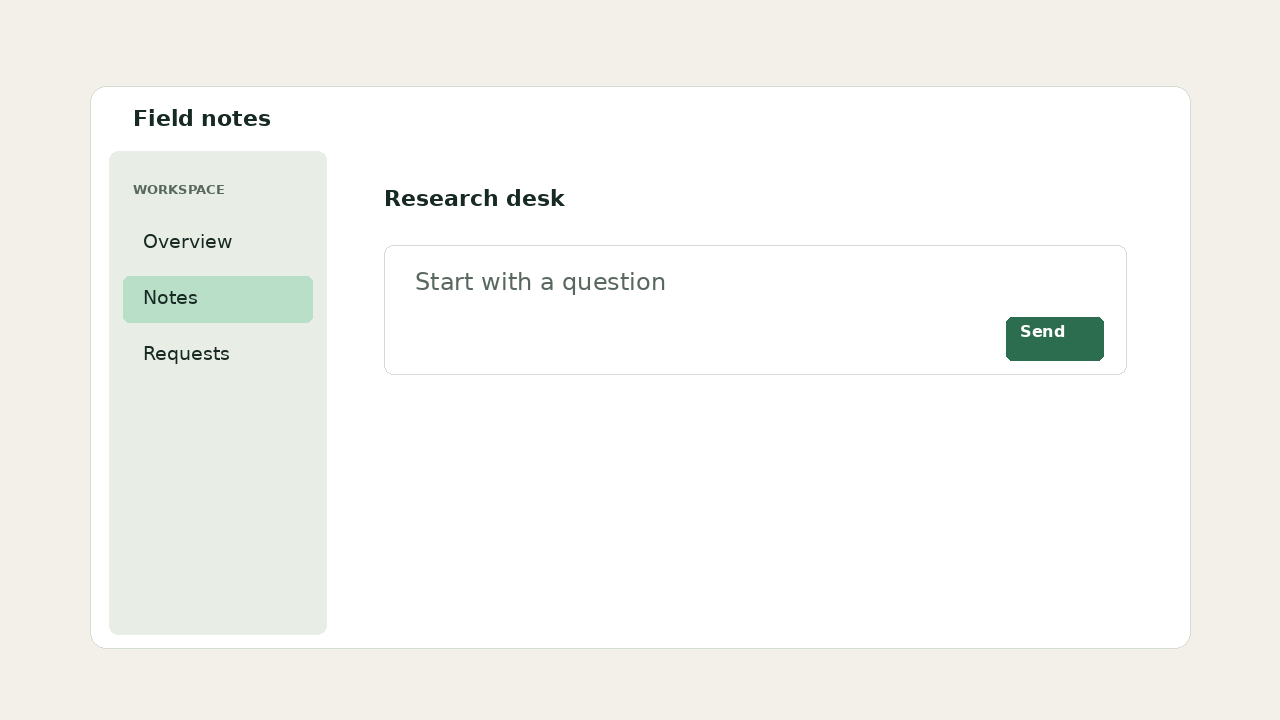
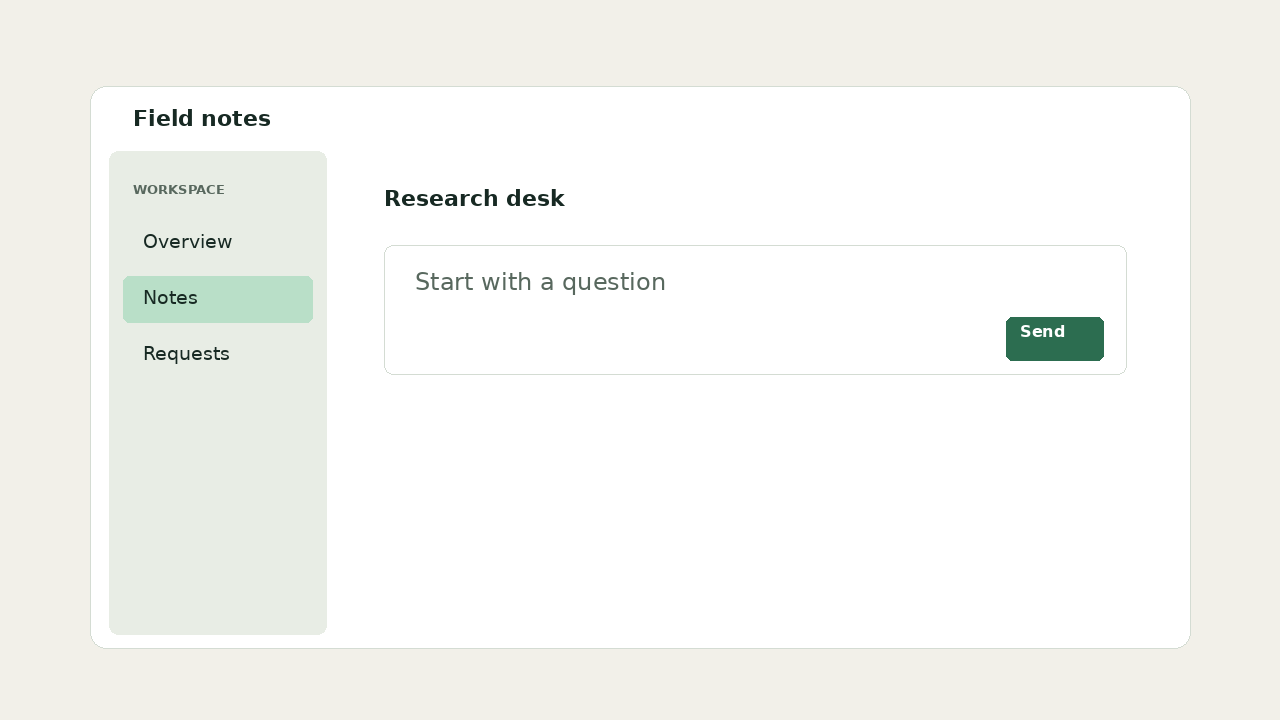
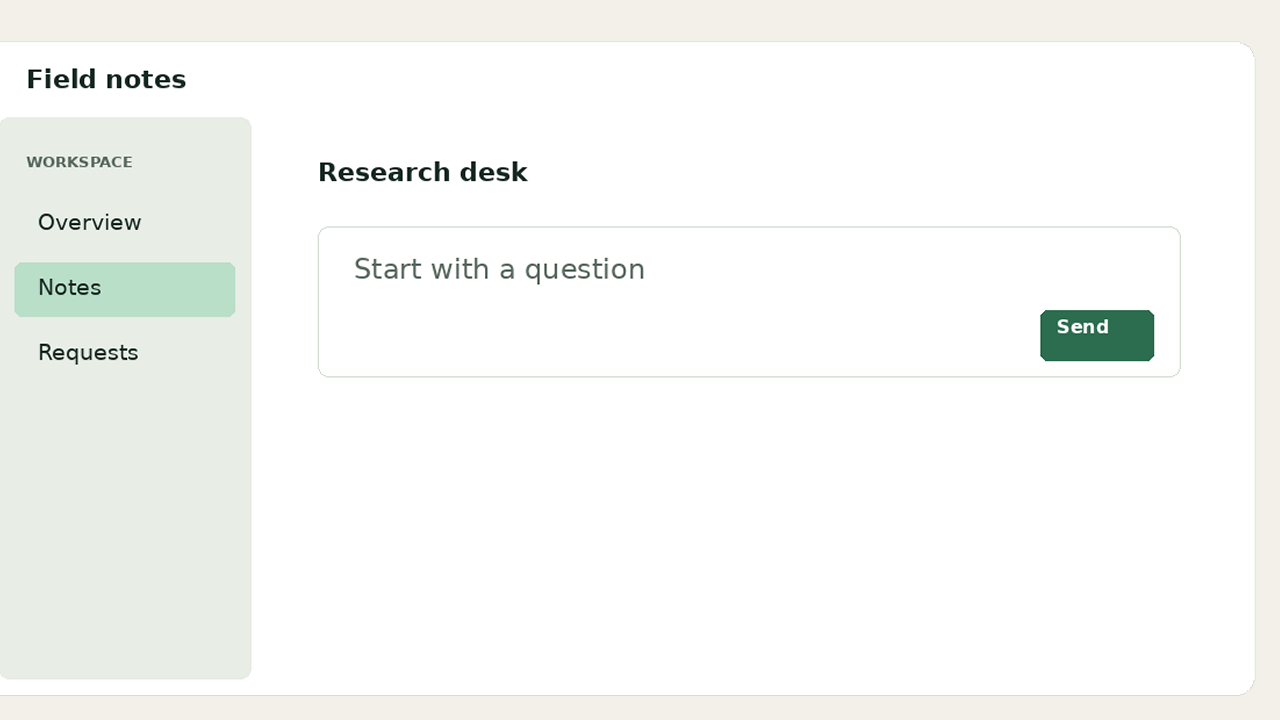
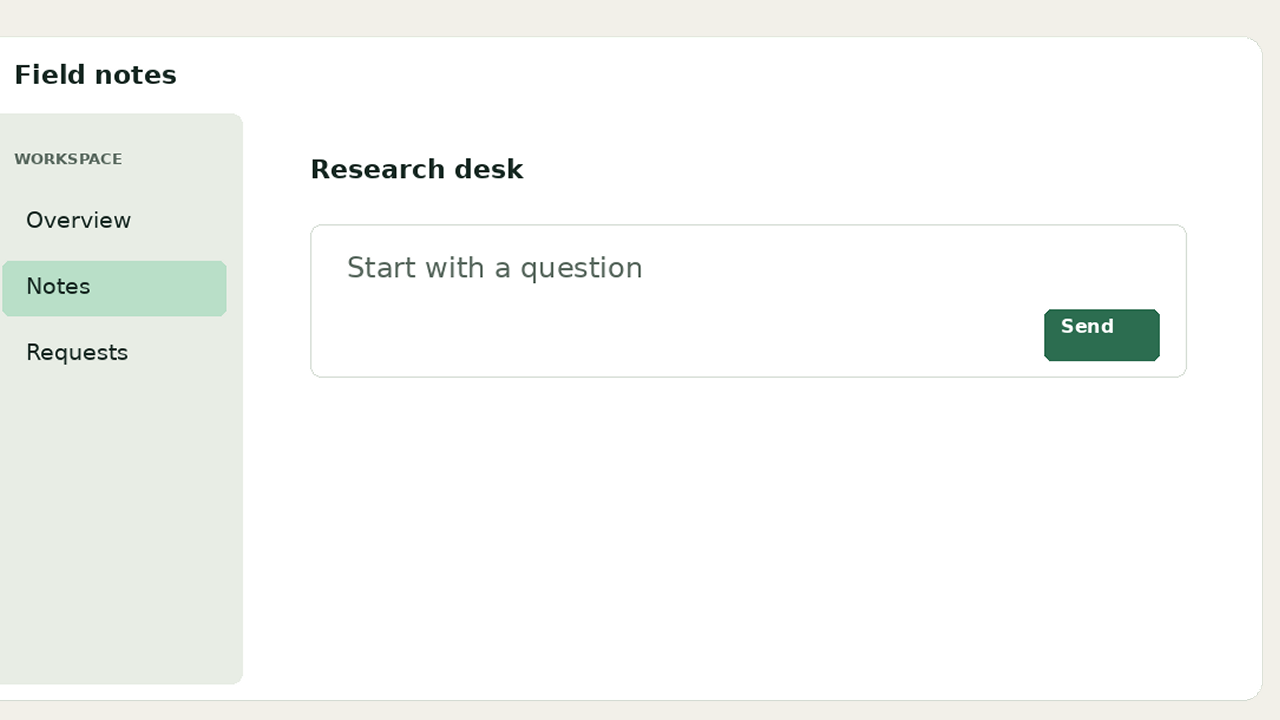
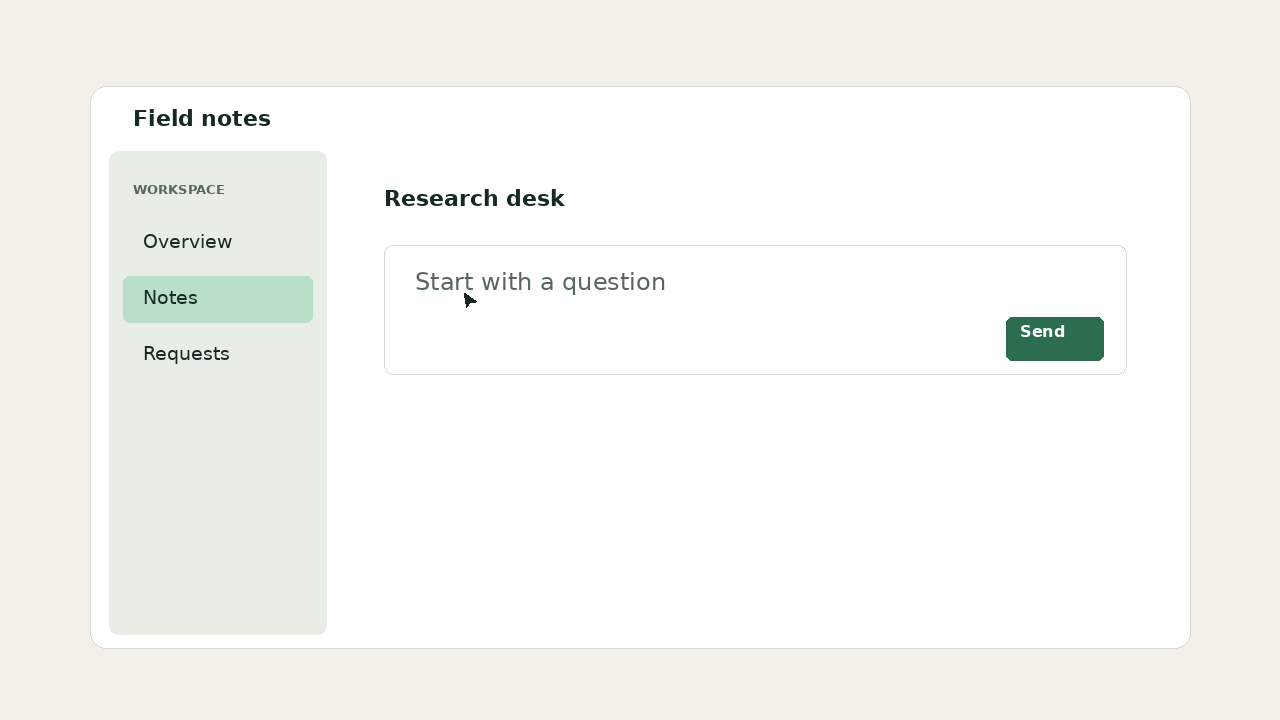
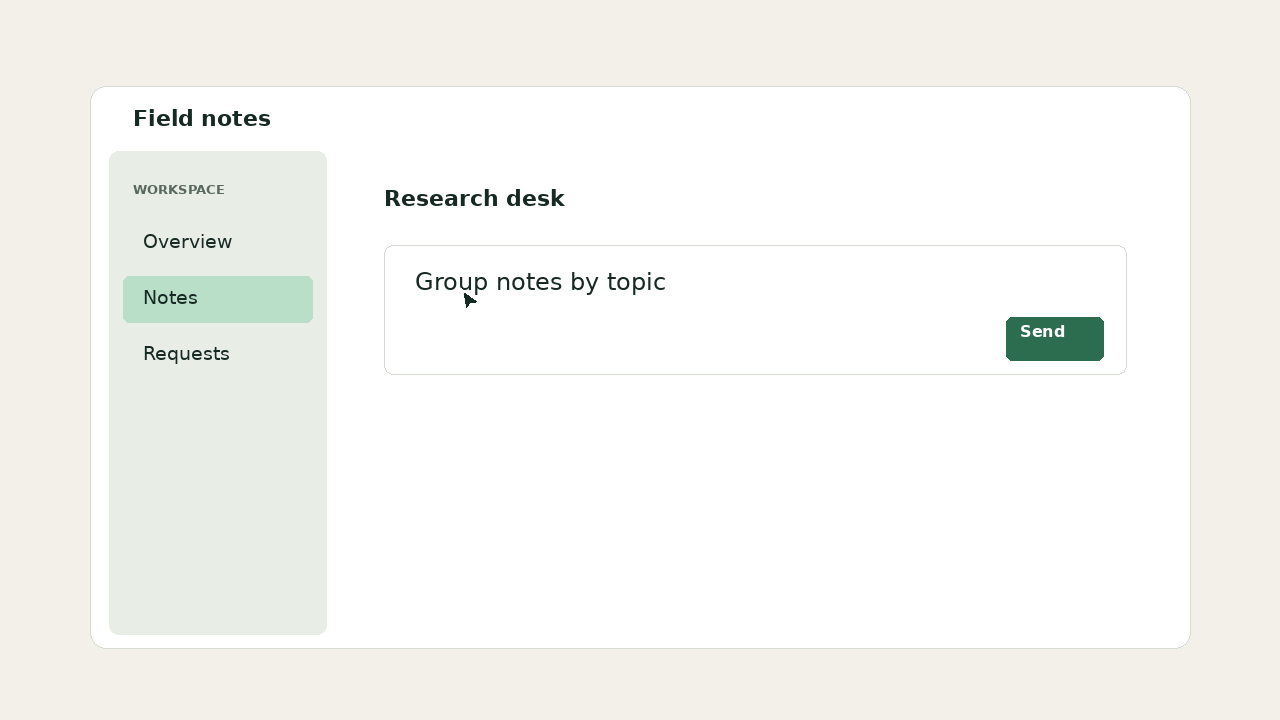
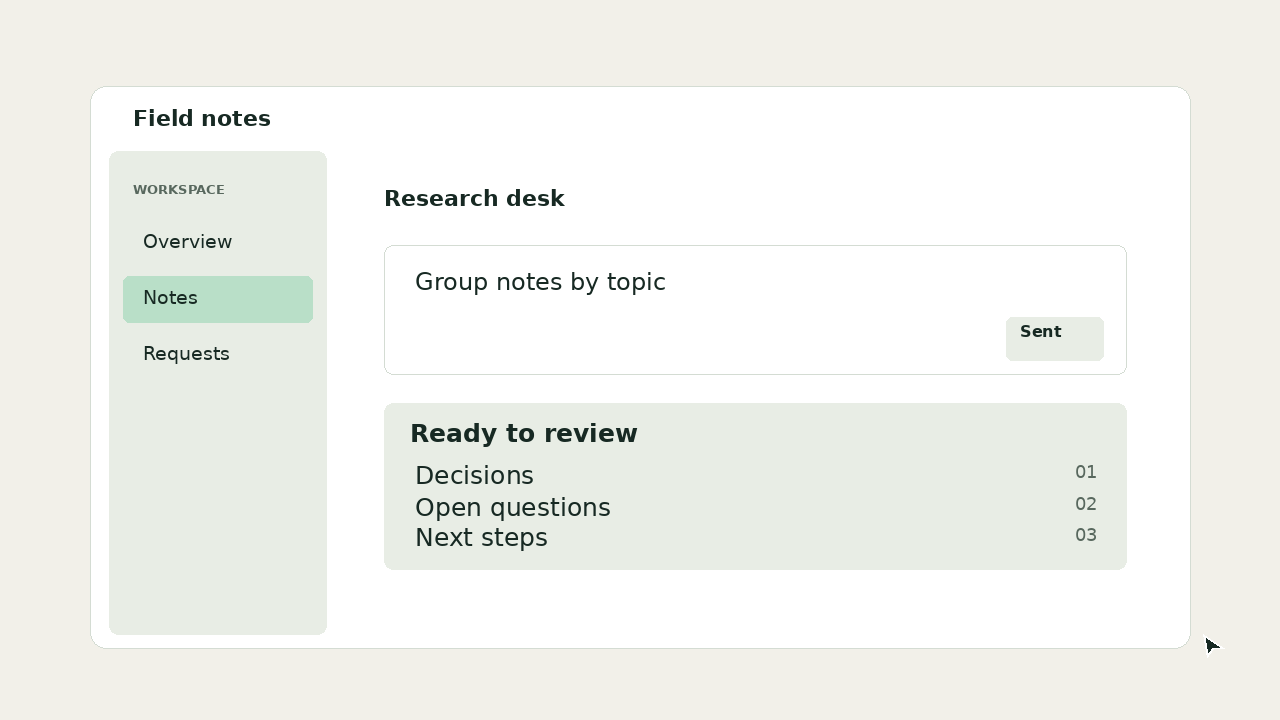
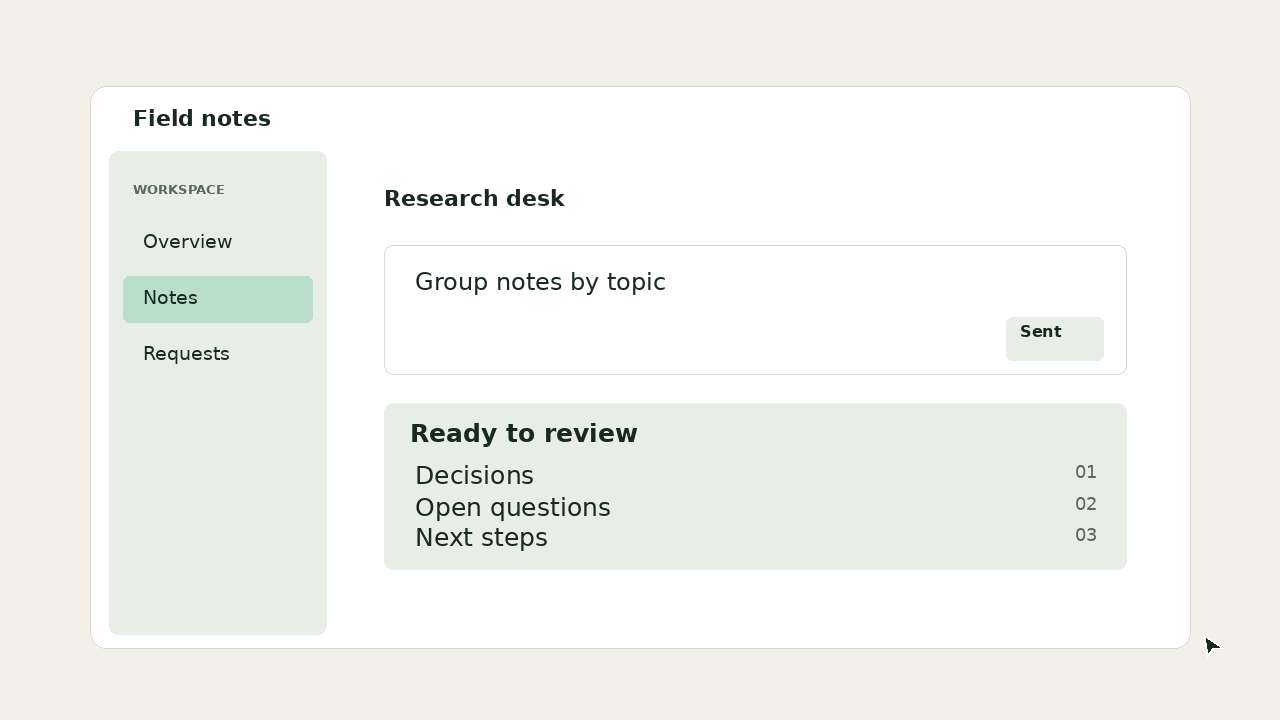
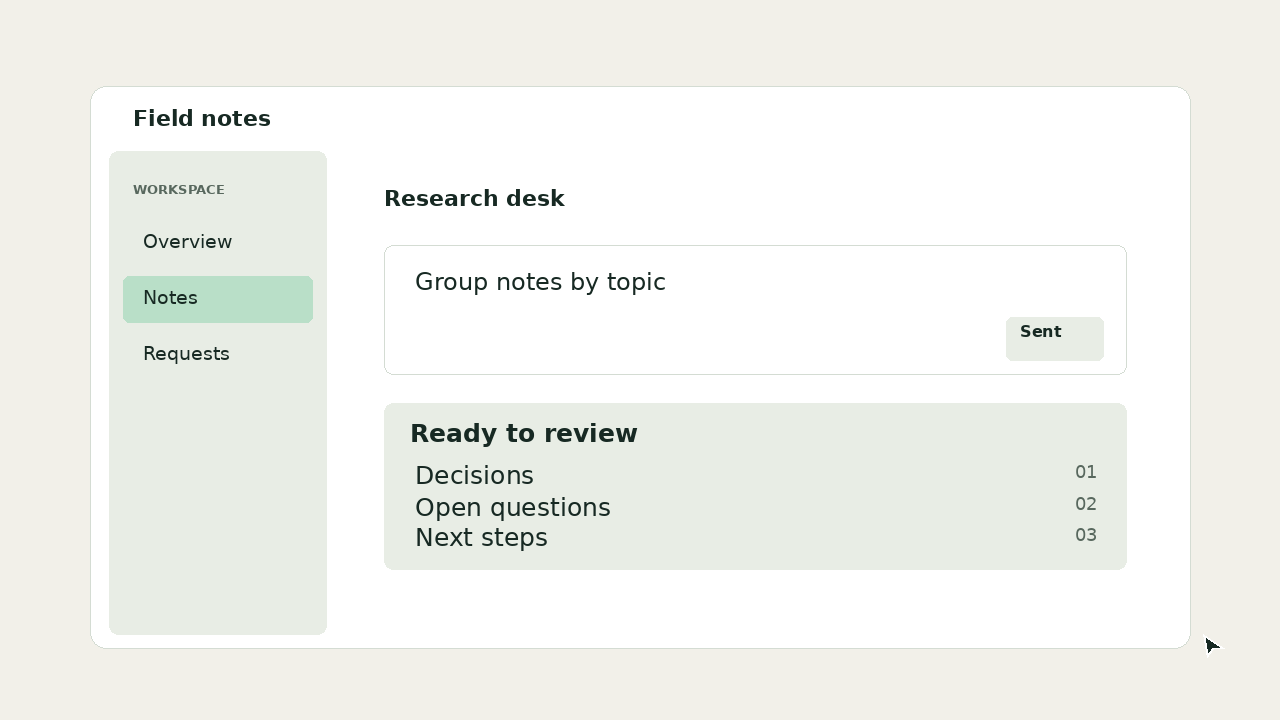
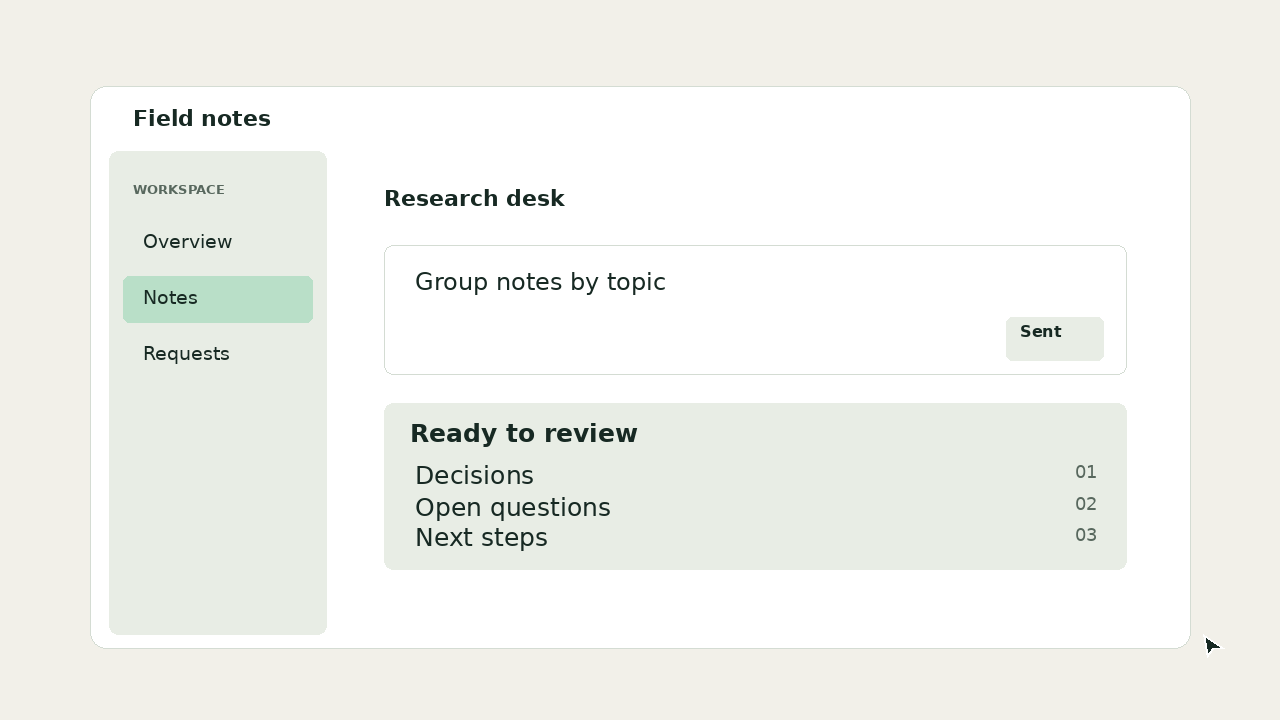
opening-codex — A first look at the Codex app, 0.000–9.000 s. A complete title cuts to a formed app, which rests before focused interaction. editorial-interpretation. Contrast: contrast: direct cut, not continuous container growth. Inspection and limits.
opening-atlas — Introducing ChatGPT Atlas, 0.000–14.000 s. A retained icon and later composer precede a gradual reveal of browser context. editorial-interpretation. Contrast: contrast: staged reveal of context. Inspection and limits.
review-codex — A first look at the Codex app, 92.500–98.000 s. The pane is established, then the camera moves, then an inline action opens. editorial-interpretation. Contrast: native frames support qualitative deceleration, not an exact ease. Inspection and limits.
cut-atlas — Introducing ChatGPT Atlas, 72.000–76.000 s. Close crop at 72.300 s is followed by the whole window at 72.333 s. measured-observation. Contrast: contrast: adjacent-frame cut rather than a push. Inspection and limits.
Checkpoint images and reproducible render settings
sidebar-codex — A first look at the Codex app, 17.000–22.000 s. Pointer action precedes the wider new-thread framing; the selected excerpt ends before full settlement. editorial-interpretation. Contrast: interaction-led progression. Inspection and limits.
task-agent — A Look at ChatGPT agent, 4.000–7.000 s. The container grows, the request types, and website content arrives later. editorial-interpretation. Contrast: contrast: cursor-attached editorial typing rather than a native caret. Inspection and limits.
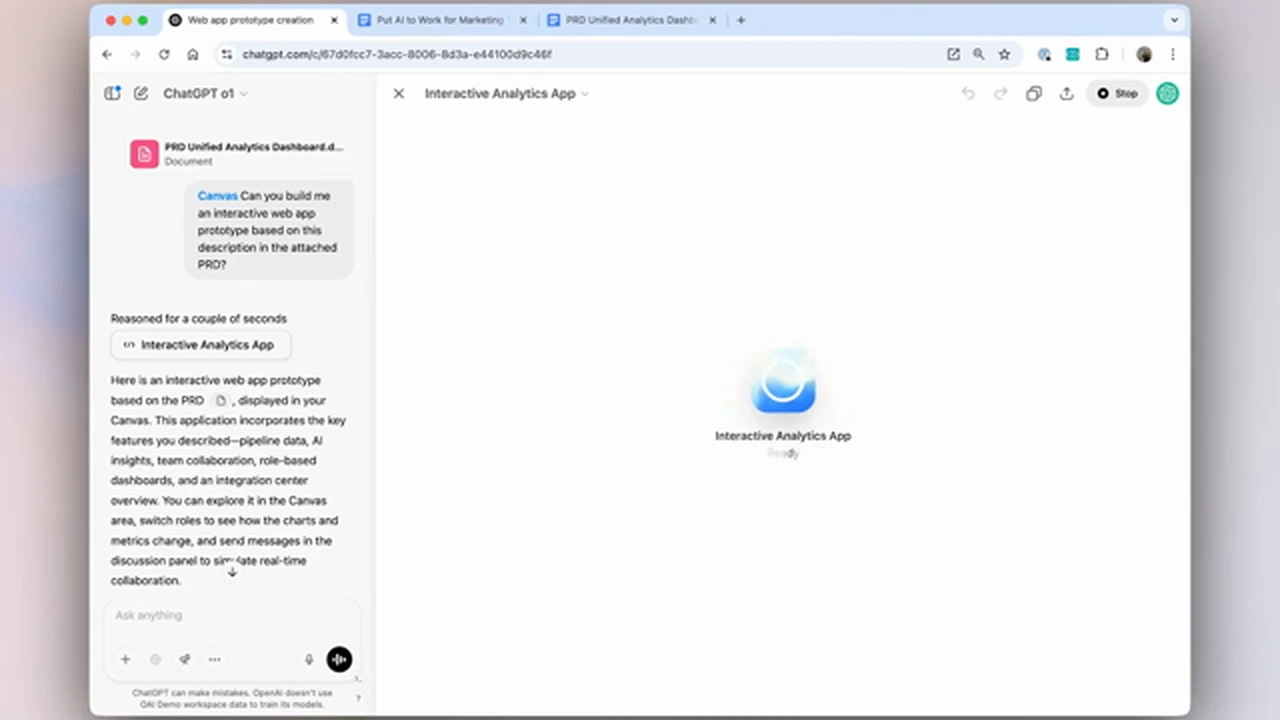
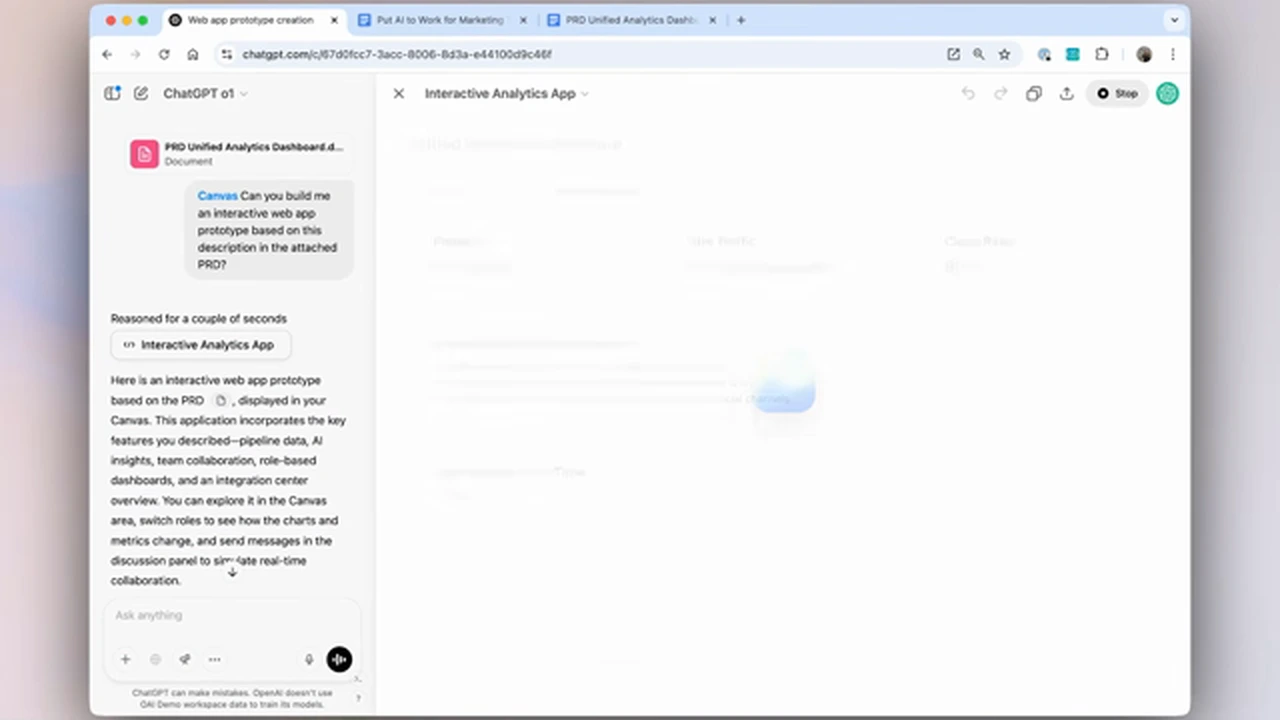
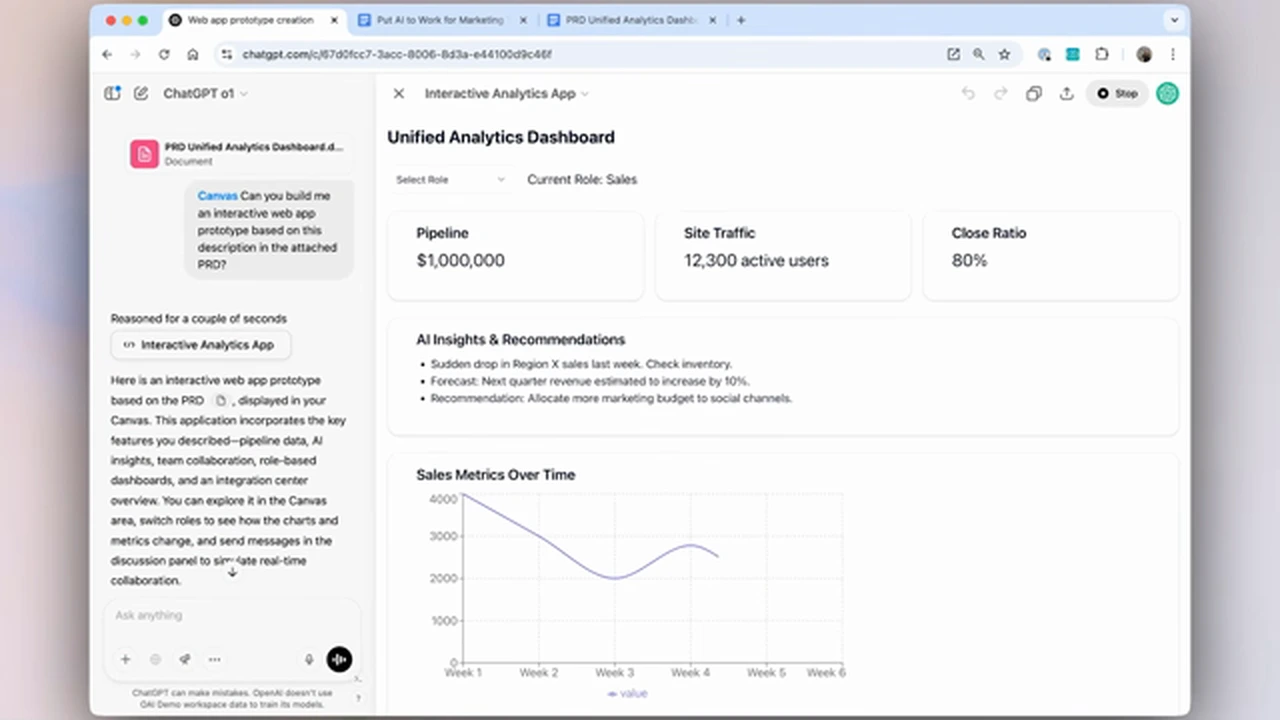
preview-canvas — Prototyping with canvas in ChatGPT, 90.000–98.000 s. Pending gives way to a dashboard; chart content continues drawing after the dashboard appears. editorial-interpretation. Contrast: content arrival is not readability onset. Inspection and limits. Additional consecutive-frame check: preview.
patch-ide — Shipping code to your IDE with ChatGPT, 92.000–100.000 s. A working state gives way to a visible diff and review controls; a later explanation shifts the panel. editorial-interpretation. Contrast: contrast: inspectable changes rather than a generated chart; no test-pass claim. Inspection and limits.
Checkpoint images and reproducible render settings
result-codex — A first look at the Codex app, 121.000–130.000 s. The app output remains visible through the 127.503 s sample; a white closing wordmark is present by 128.003 s. The output changes at late samples, so this is not a nine-second frozen result hold. measured-observation. Contrast: single-example finding for the sampled final output-to-title boundary. Inspection and limits.
ending-codex — A first look at the Codex app, 127.850–132.610 s. The wordmark departs before a changing mark reaches a quieter pose around 131.131 s. editorial-interpretation. Contrast: quiet landmark is visual, not an exact authoring keyframe. Inspection and limits.
ending-atlas — Introducing ChatGPT Atlas, 89.650–93.500 s. The outer tile precedes the blue interior and directional symbol; a later URL card is outside this excerpt. editorial-interpretation. Contrast: contrast: nested icon build, not wordmark-to-knot deletion. Inspection and limits.
Checkpoint images and reproducible render settings
0.000 s / frame 03.900 s / frame 1174.000 s / frame 1205.000 s / frame 1506.000 s / frame 1806.600 s / frame 1988.900 s / frame 267
New bounded observation / official source
Visible is not yet finished.
The dashboard emerges while the chart still draws. The start of a result hold belongs after the necessary content settles, not at the first container pixel. These source stills are commentary, not production assets.
92.416667 s / Loading remains92.583333 s / Dashboard emerging93.083333 s / Chart still extending
Source: OpenAI, “Prototyping with canvas in ChatGPT,” official film, 91.75–93.25 s. Consecutive decoded source frames; no product-latency claim.
Timing, composition and proof
These are adaptations of sequencing, not reproductions of branding or source imagery. Compare the source-linked clips with the originals at 1×, then inspect the boundaries. The settings below come from the original study timelines; source intervals retain their own precision labels.
Title to interface · 10 seconds
Criterion
Source evidence
Original study / decision
Timing
Codex retains its title at 2.544 s and shows the app at 2.586 s. Atlas shows a prompt at the sampled 6.500 s, with browser context developing later.
A deliberate cut at 3.000 s follows a completed-title hold from 0.700 s. Four seconds of interface orientation precede the push at 7.000 s. This is intentionally slower and more forgiving, not copied timing.
Composition
Codex presents a formed desktop; Atlas reveals the larger container around an input.
A single .86W × .78H workspace retains a header and sidebar. The original left-aligned title mask differs from both source typographic builds.
Attention
The Codex review example establishes the pane before its push around 95.3–95.9 s.
The .500 s push is isolated from typing and result changes. A fixed focus pivot makes the next useful region larger.
Continuity
Atlas's separate shopping reframe is a hard cut, not a smooth zoom.
The title cut is explicit; the later push has intermediate positions. No inferred title-to-window morph. The two recipe segments join with identical pixels.
Readability
Complete title and identifiable app precede the tighter crop.
The complete phrase gets 2.3 s; the interface gets 4 s before moving. The final detail remains still from 7.5 to 10 s. Essential labels remain readable in the saved 640 × 360 inspection.
Interaction to readable result · 18 seconds
Criterion
Source evidence
Original study / decision
Timing
Codex's pointer leads its changed workspace. Agent's task example has container, typing and website anchors at 4.367, 4.867 and 6.250 s, not measured latency.
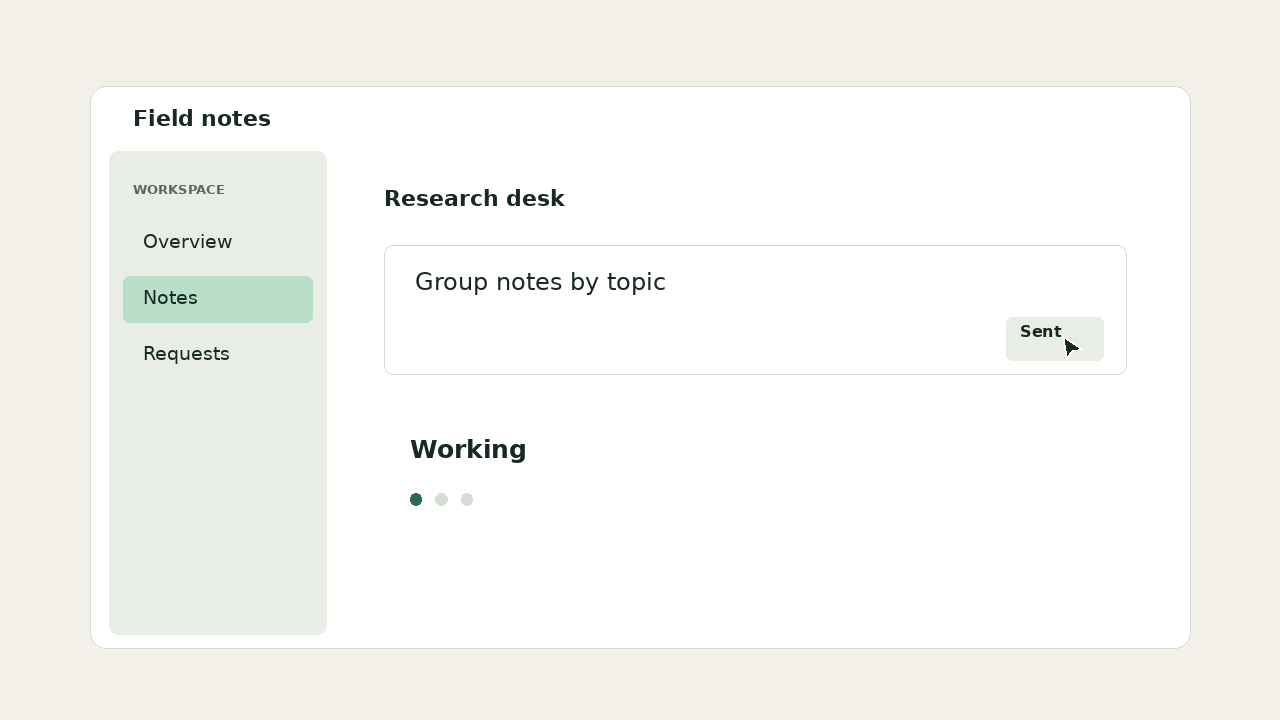
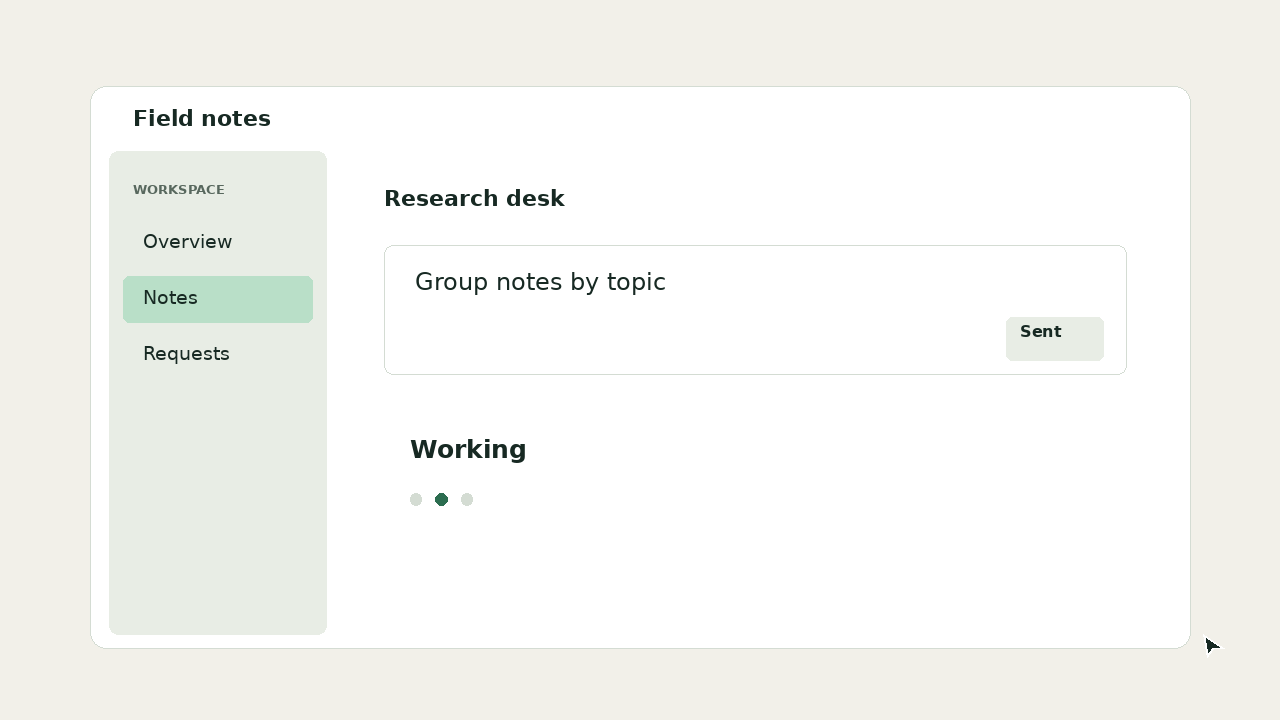
Target arrives at 1.3 s; complete request at 5.8 s; submission at 7.1 s; result reveal begins at 9.9 s; the final protected hold begins at 11 s. Ordering is causal; waits are explicitly illustrative.
Composition
The preview film retains the request beside its running output. The IDE example exposes the diff and review controls.
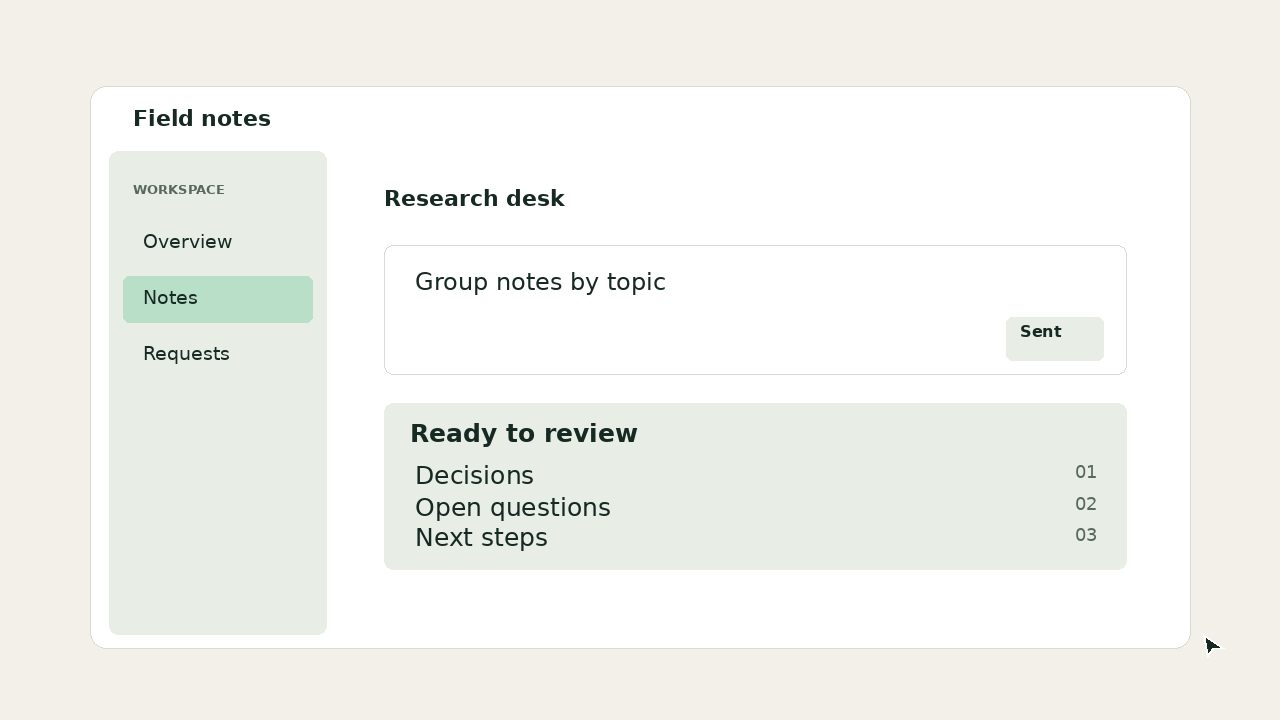
Request and result share one stable workspace. Only the result slot changes. The fixture proves grouping only; it does not imply a real agent or backend ran.
Attention
The preview's dashboard begins appearing before its chart finishes drawing.
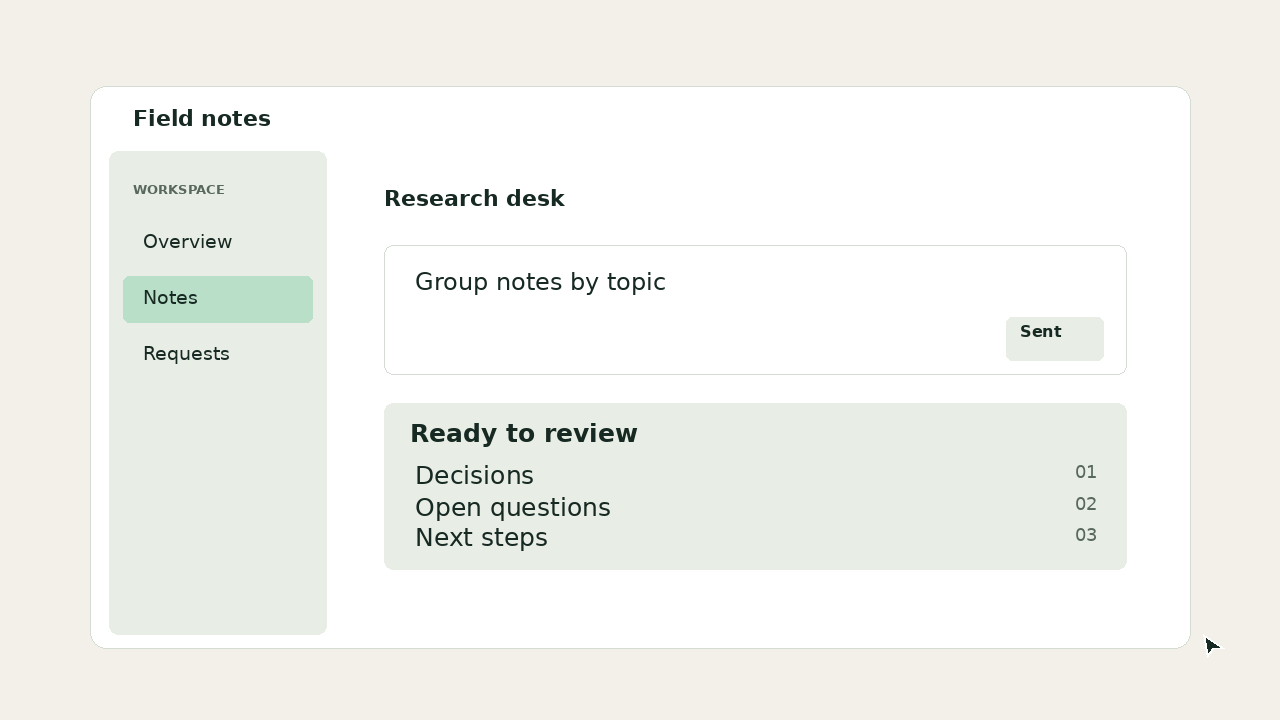
Container arrival is not the hold onset. Fade completes at 10.4 s, a settling allowance runs to 11 s, then nothing moves. The cursor is parked outside the output.
Continuity
The source task remains recognizable through work and result states.
The complete request persists after submit. Pixel tests check all three inter-recipe joins, including the pending state. There is no blank reset between segments.
Readability
The two sources show different kinds of output; neither defines a universal hold.
The result has eight essential words. The proposed floor is about 3.27 s. The combined stable hold is 7 s, and the card is readable at 640 × 360. This validates the fixture, not comprehension of arbitrary dense output.
Result to ending · 9 seconds
Criterion
Source evidence
Original study / decision
Timing
Codex's final output is still present at sampled 127.503 s; closing type is present by 128.003 s. Its mark is visually quiet around 131.131 s.
Five seconds of unchanged proof precede the ending cut at 5 s. The original mark builds from 5.3 s; the declared quiet interval is 6.6–9 s.
Composition
Codex clears to a simple field. Atlas builds an interior symbol within an already-present tile and later adds a URL card.
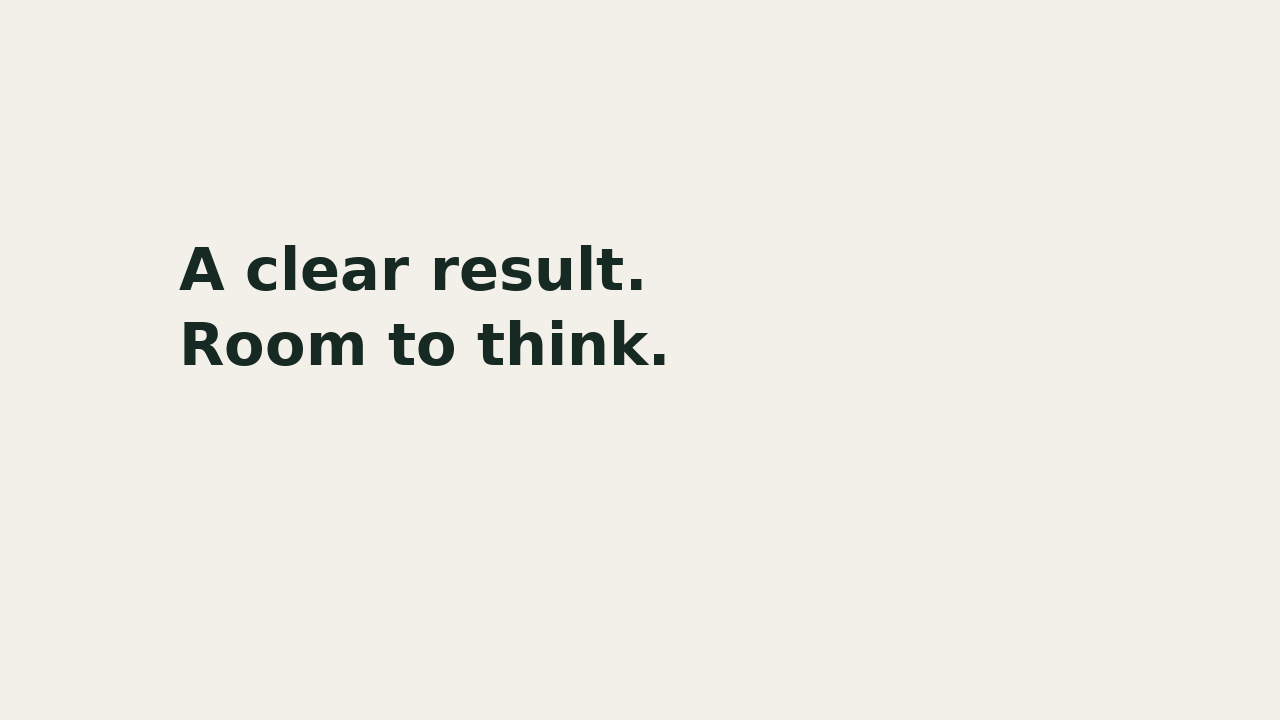
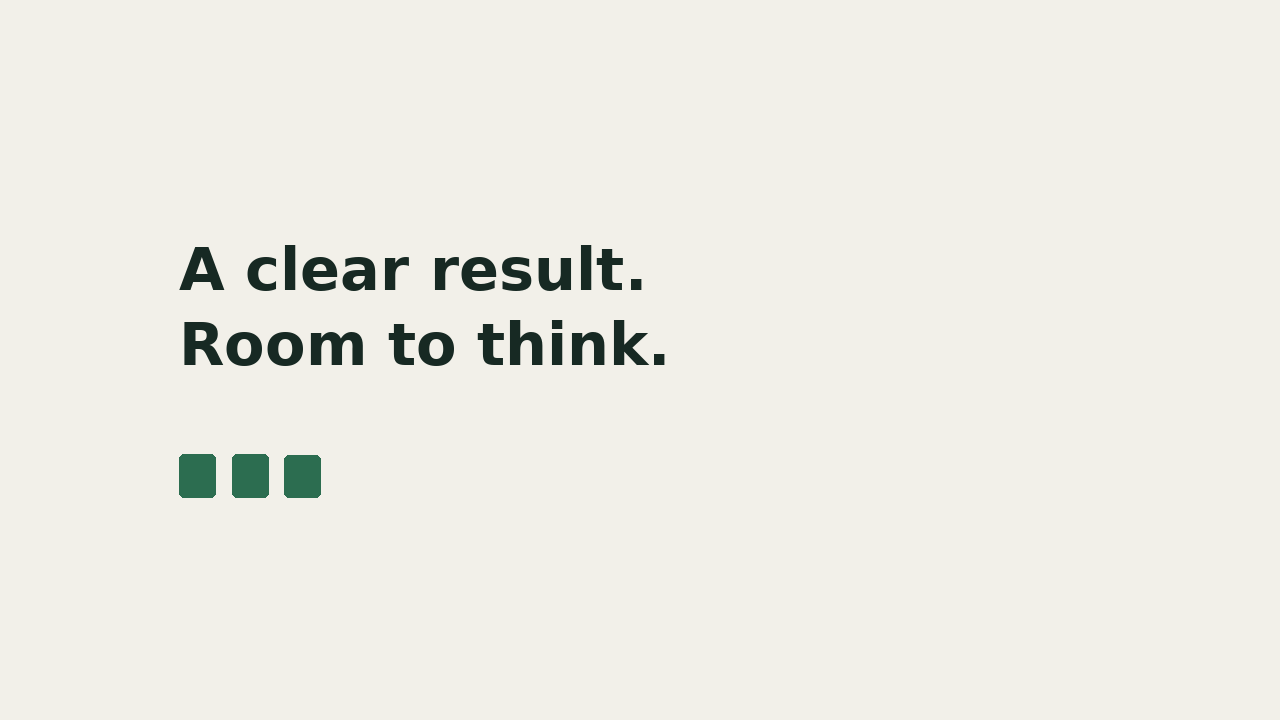
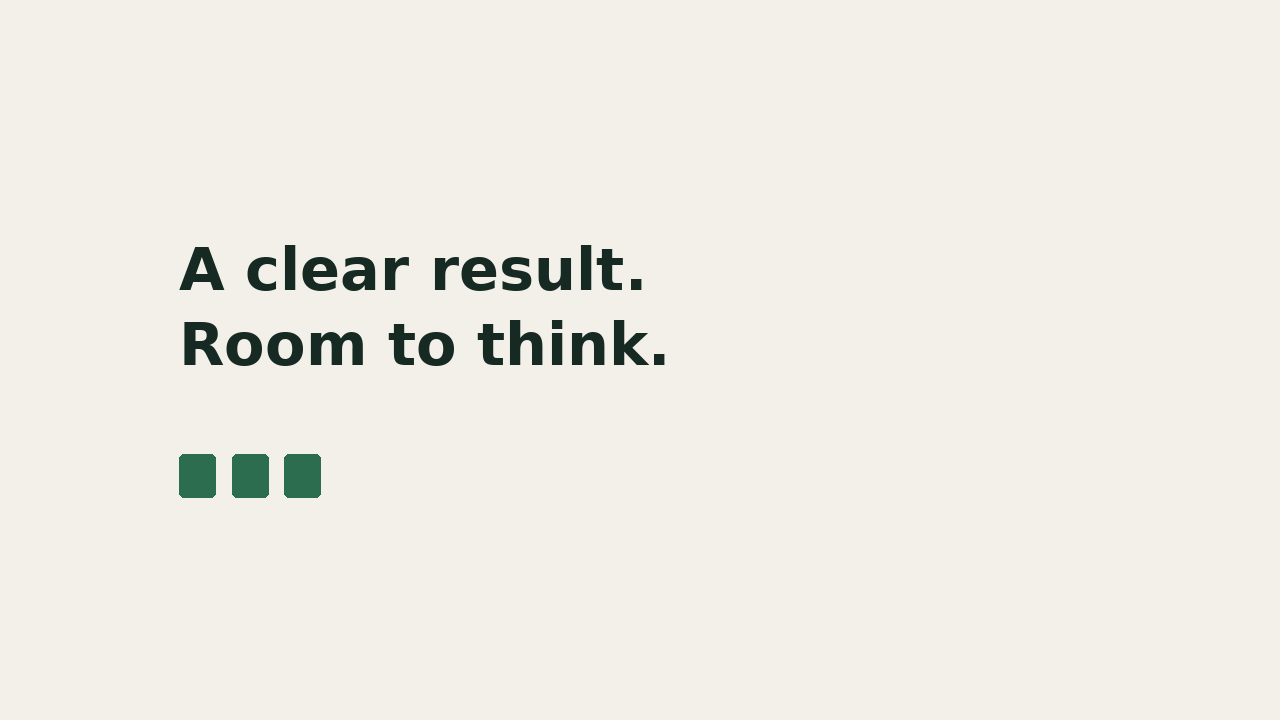
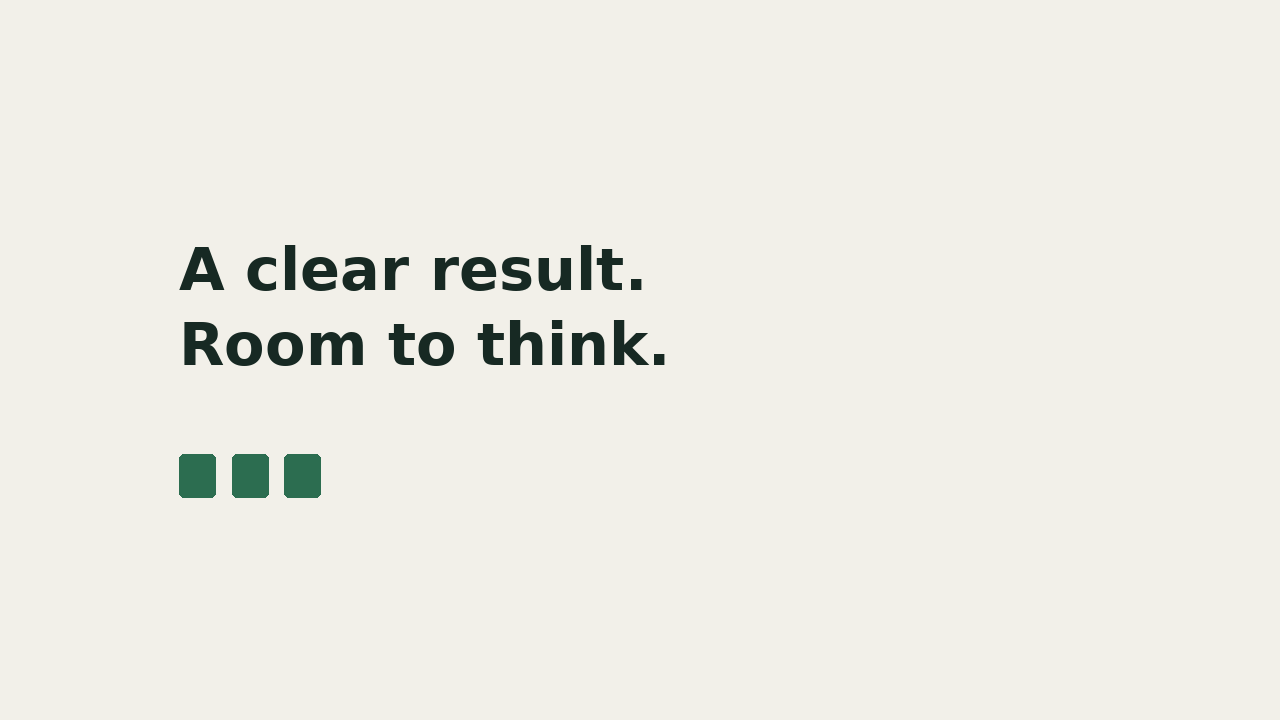
Original closing text and three simple bars occupy a quiet paper field. No copied knot, icon, logo, slogan, URL call to action or source pixels.
Attention
Both closing studies separate main arrival from a quieter tail.
Two readable lines arrive together; bars finish before the quiet hold. No continuous rotation or ambient texture.
Continuity
The final UI and closing identity are different scenes, not a proven morph.
The output-to-ending change is a hard cut. The result-hold and ending recipe join before that cut with identical pixels.
Readability
Source quiet landmarks are visual judgments, not exact freeze declarations.
Raster hashes verify the study's ending actually stops moving for 2.4 s. The export has no audio track. Actual presentation end must still be scheduled against the supplied recording, not this 9 s research example.
Repairs exposed by reproduction
The first object-continuity test compared the full rounded-card bounding box. That incorrectly counted its transparent corners, where the surrounding background is supposed to change. The acceptance test now compares every opaque card pixel through the same rounded mask. It still rejects a moved, resized or altered object; it does not require the old background to survive a context cut.
The entry point now states the difference between design data and the explicit renderer: the documented layer rectangles are a contract, not a general-purpose layout engine. Phase times, selected motion parameters, assets and duration changes drive the reference implementation. A new geometry requires updating the construction and checking it. This prevents an agent from assuming that editing a JSON rectangle silently rewrites the entire interface.
Remaining gates are production-specific: authentic product capture, actual recorded emphasis and pauses, real reaction/startup offset, supplied ending tail, audience reading test, final font/identity approval, and Slides/OBS/meeting playback. None is passed by a neutral synthetic sequence.
Verification results
Locally verified on September 5, 2026. The accompanying JSON records verification of the original studies and local site bundle, not deployment status or final production approval.
Check
Result
Data and provenance
12 recipe IDs, 19 evidence records and three sequences validate; references resolve against retained source datasets and checksums. 6 deliberately malformed records are rejected, including invalid parameter units/types.
Original renders
15 H.264 MP4s decode with exact frame counts, declared durations, BT.709 tags and no audio streams. Final decoded frames remain within the stated RGB-error threshold.
Reproduction
The three sequences render from the public ZIP in an otherwise empty directory, with no research corpus or application code. All 20 RGB checkpoints and PNG files match. MP4 hashes also match in this pinned environment.
Choreography
16 checks include quiet holds, exact continuous segment joins, retained opaque object pixels, request/submit/result order, text fit and overflow rejection. Too-short durations fail; extra time extends the last hold.
Browser
24 page/width/theme combinations; all 12 recipe players; full 1× playback of all three sequences; half-speed, checkpoints, keyboard scrubbing, no-JavaScript details and reduced-motion/no-autoplay pass. No page or local HTTP errors.
Source playback
Nine existing official-channel excerpts play to completion at 1× with decoded-video callbacks and saved playback screenshots. New source inspection is limited to the documented windows.
Existing library
All 100 film routes remain; 100 source motion clips, opening/logo/lower-third media and internal references pass the retained static suite. Bounded browser regression checks 16 layouts, three film routes, three source players, six lab experiments and three complete clip playbacks.
Preservation
2,807 existing files are byte-identical, including 2,793 media/data/font files. 112 existing HTML pages change for navigation. No files are removed. The integration baseline includes the concurrent lower-third/font updates.
Publication boundary
Public text and structured data are scanned; archive members are allowlisted and scanned after opening the ZIP. The full prose scan requires no redactions. No internal code, catalogs, recordings, full source movies or raw downloader metadata are included.
Readability
The original title/interface, result and ending are visually checked at 640 × 360. The result's eight essential words remain readable; this is a fixture check, not a universal reading-speed guarantee.
Open a sequence's checkpoint images for composition evidence and its render.json for frame indices, RGB hashes, input/font checksums and settings. The linked JSON holds the machine-readable results. comparison.md explains the decisions against the references rather than claiming a pixel match to a source film.
The shared preview host explicitly reported itself unavailable. Browser verification therefore used local Chromium through the existing Playwright environment. No alternate publishing path was used.
Still required for production: authentic product behavior, actual recorded speech and pauses, rehearsed manual offset, a genuine ending tail, approved export settings, an audience reading check and the consolidated storyboard review. The research does not pass those gates.